
The easiest way to make AI look productive is to time the moment it produces an answer. Real work takes longer. Someone has to prepare the input, check the result, fix mistakes, and fit the output into the next step.
A useful experiment measures that whole process. Start with one recurring, low-risk task you understand well. Use an approved tool you already have access to, with no new paid subscription or API required. If you lack suitable access, prepare the experiment now and wait rather than uploading work to an unfamiliar service.
Why a small test is worth doing
Research suggests the benefits depend on the task and setting. In a field experiment involving 7,137 knowledge workers across 66 firms, researchers randomized access to an integrated generative AI assistant. They found email time savings among users but did not detect changes in the quantity or composition of tasks from individual access alone. The working paper was revised in November 2025; some authors were employed by Microsoft, the tool's maker.
A study of consultants published in Organization Science found better performance on tasks within the tested system's capabilities, but worse correctness on a task outside them. Those results concern particular systems and experimental tasks. They do not establish what a current free assistant will do for your business.
Step 1 Choose a task with a checkable finish
Good candidates for an initial trial include turning your own nonconfidential notes into an agenda, restructuring a public document into a summary, or drafting an FAQ from approved public product information.
Choose something you do often enough to compare several examples. Avoid beginning with a major client deliverable, a hiring decision, or advice requiring professional judgment. A small, reversible mistake is easier to learn from than a costly public one.
For this example, use fictional project notes to produce a weekly update. Define the required sections before you start: completed work, blockers, next actions, and decisions needed.
Step 2 Set a quality threshold before measuring speed
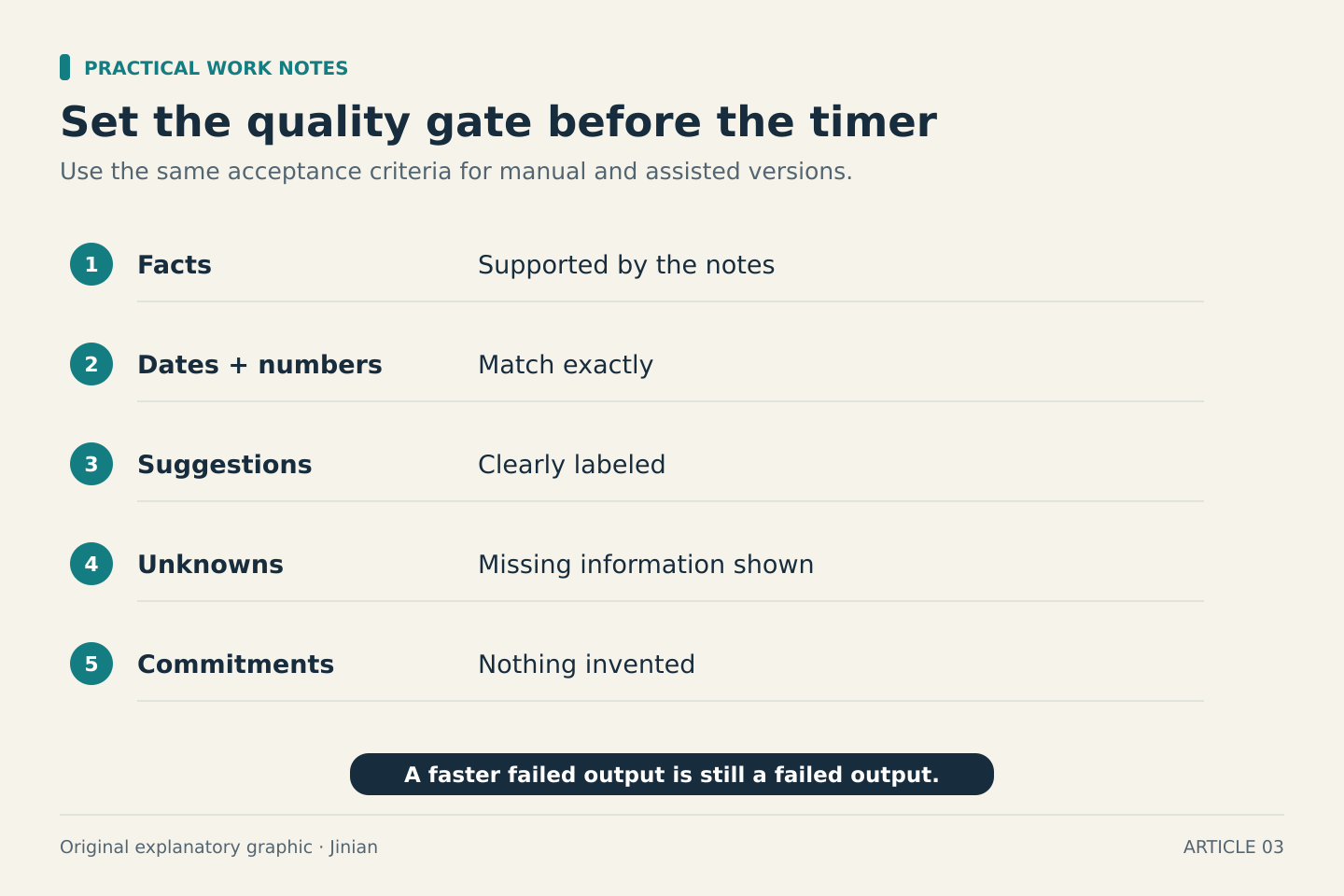
Write five acceptance criteria:
- Every factual claim must be supported by the supplied notes
- Dates and quantities must match exactly
- Suggestions must be labeled as suggestions
- The update must identify missing information
- No commitment may be invented
Decide which errors make the output unusable. An invented delivery date might be a failure even if the draft otherwise reads well. Keep this threshold the same for manual and assisted versions.
Step 3 Establish a manual baseline
Complete one example using your normal process. Record the minutes spent preparing, producing, and reviewing the update. Save the final version and note any mistakes you caught.
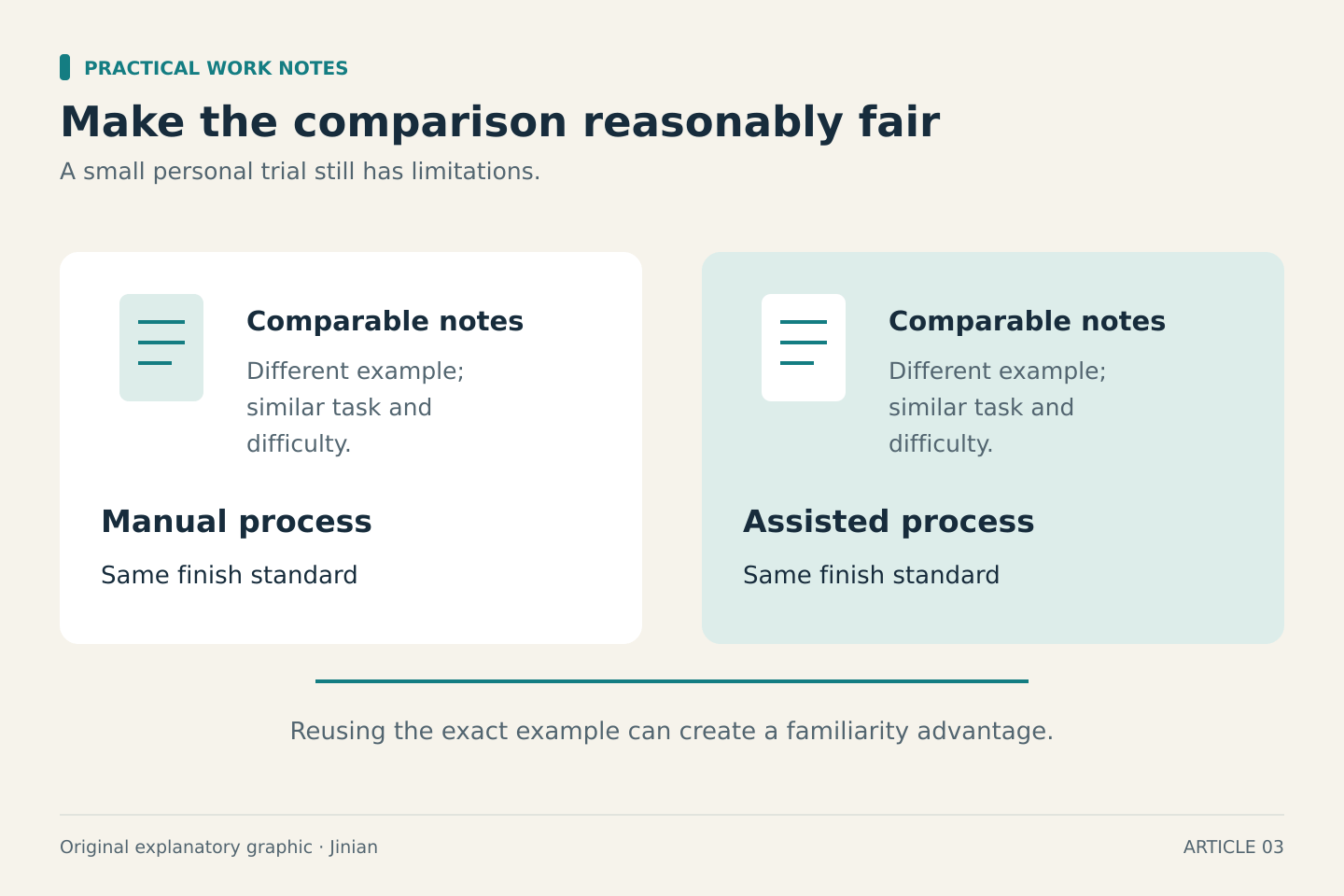
Then use a comparable set of fictional notes for the assisted attempt. Reusing the exact same example can make the second attempt faster simply because you already know the material. A small personal trial will still have limitations, but comparable examples help you avoid an obvious misleading comparison.
Step 4 Give the assistant a bounded instruction
Try this original practice prompt, adapting the format to your task:
Create a weekly project update using only the notes below. Use the headings Completed, Blockers, Next actions, and Decisions needed. Preserve all dates and numbers. Do not invent owners, deadlines, promises, or facts. List missing information separately. If the notes conflict, flag the conflict instead of resolving it. Notes: [insert fictional or approved material].
This prompt is a starting point, not a tested guarantee. Check current employer and client policies before using real material. Removing a name may leave other identifying or confidential details, so fictional or public inputs are preferable for the first trial.
Step 5 Count all the work
Start the timer before preparing the input. Include prompt revisions, waiting, source checks, corrections, formatting, and the final review. Also record what went wrong: an omission, unsupported detail, wrong category, or changed meaning.
For each example, calculate:
Net minutes saved = manual total time minus assisted total time.
Imagine a manual task takes 25 minutes. The assisted version takes 4 minutes to prepare, 2 to generate, and 23 to check and correct. That is 29 minutes overall, or 4 minutes longer. These invented numbers illustrate the method; they are not expected results.
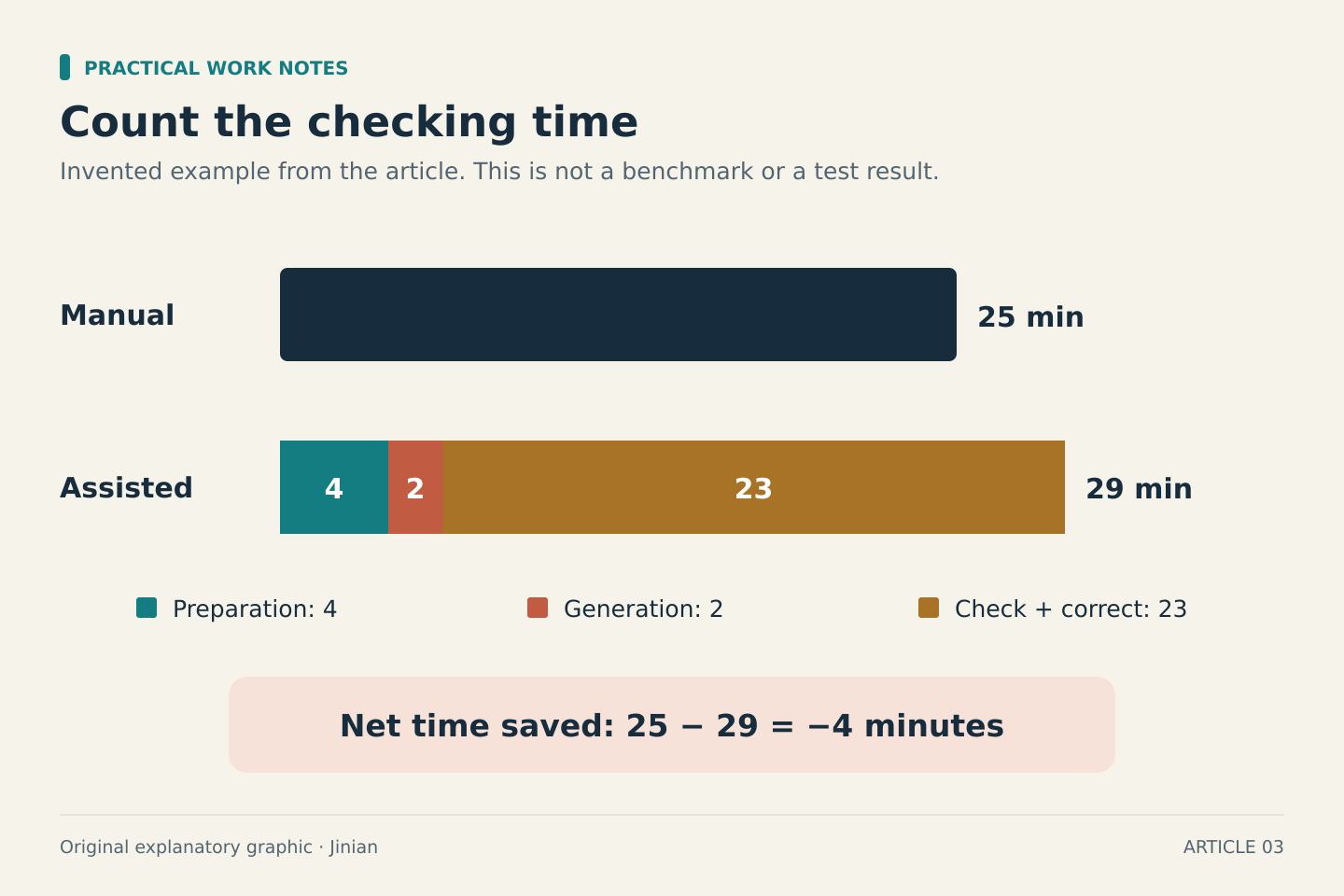
Record quality separately from time. A faster output that fails the acceptance criteria is not a successful result.
Step 6 Decide what to keep
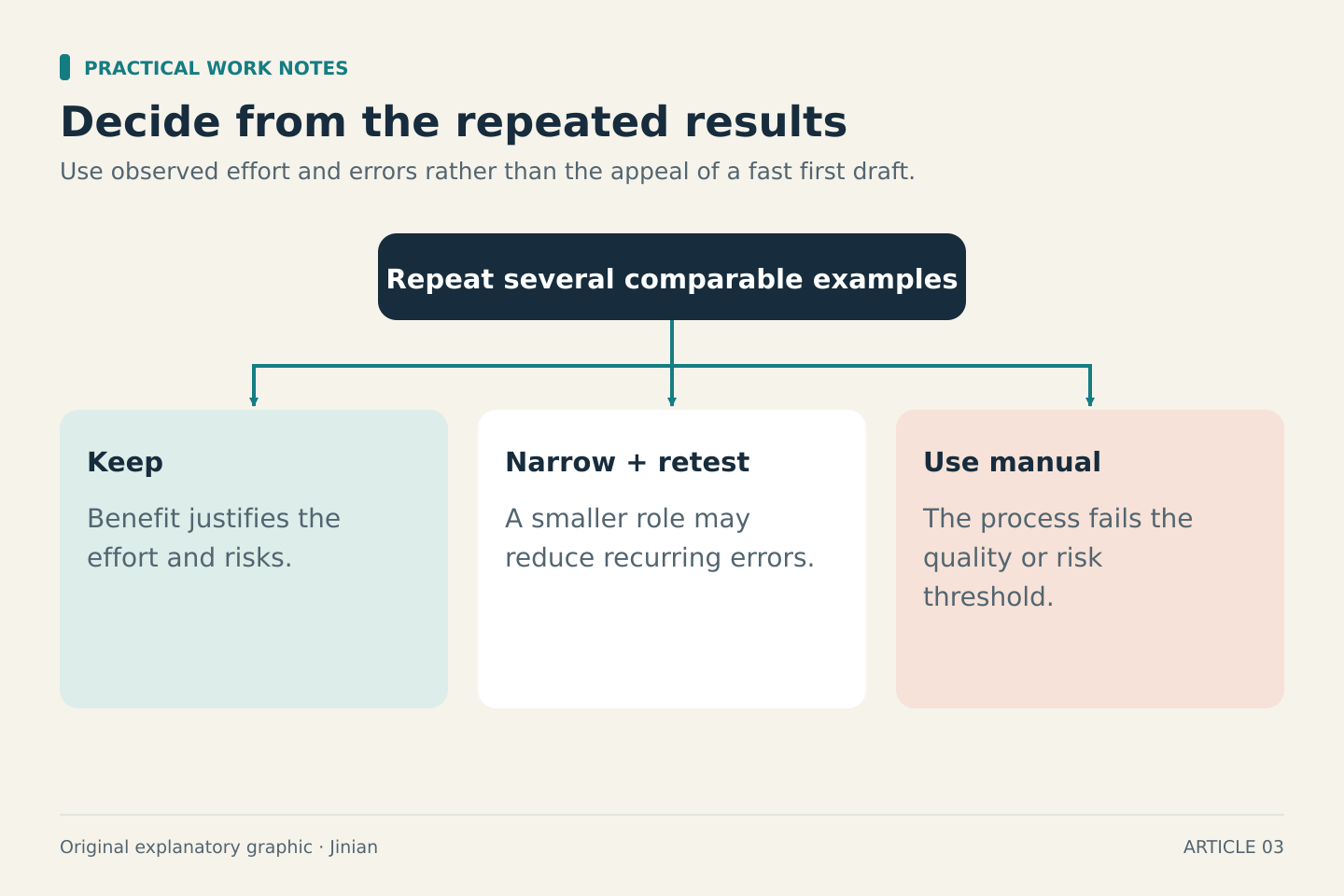
Repeat with several comparable examples. Look for recurring errors and the conditions under which the workflow helps. If the assistant reorganizes notes well but repeatedly invents next actions, narrow its role and test the revised process.
Keep the workflow only if the observed benefit justifies its effort and risks. Document the permitted inputs, instruction, review steps, and situations where you will use the manual process instead.
For freelancers, saved time becomes additional income only if there is demand, capacity, and an appropriate commercial arrangement. It may instead create breathing room or reduce overtime. You do not need to promise a financial transformation to make a careful, useful improvement to your working day.